<>Blanc-Labo S.A. your laboratory equipment specialist

Why and How to Perform a Standardized Air Sampling
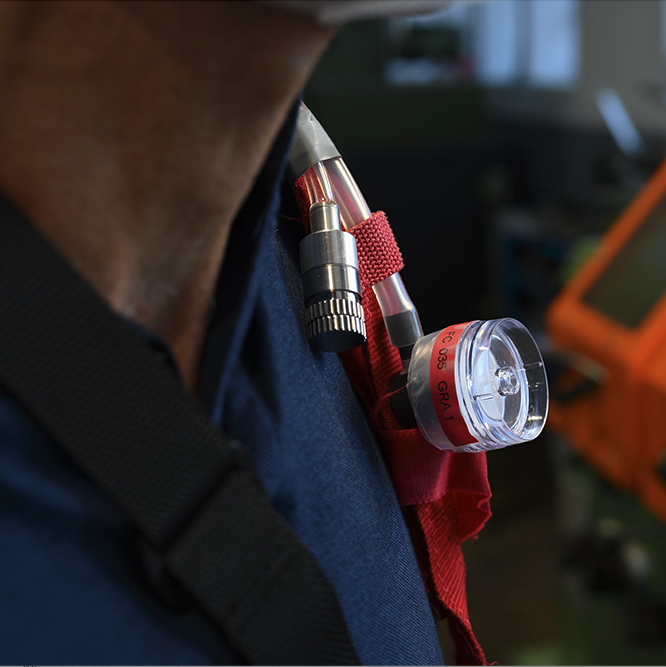
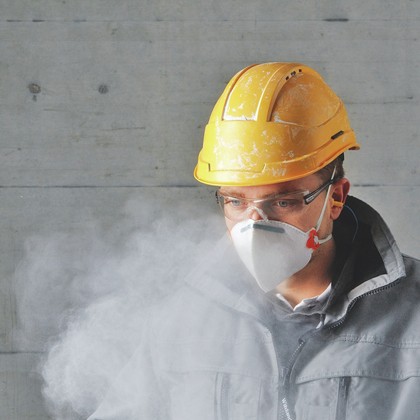
Standardized Air Sampling – At a Glance:
A rigorous method to:
Quantify workers’ actual exposure to pollutants (dust, gases, vapors, microorganisms)
Document compliance with safety standards
Prevent health risks by identifying contamination sources
Implement preventative actions if risks are identified
Training and technical guides are available from sampling equipment manufacturers (e.g., SKC) to help choose appropriate media for each chemical.
Steps to Follow:
Choose an accredited laboratory for analysis
The lab you select will determine which standardized sampling method to use, based on the pollutant, applicable standards, and its analytical capabilities. Examples of such labs in French-speaking Switzerland include Suva, Toxpro, and Le Labo.Select a sampling method
a) Active samplingUses a sampling pump to draw air through a collecting medium (e.g., filter or adsorbent tube).
Used for measuring dust, fibers (like asbestos), gases, VOCs.
Allows precise control of sampled air volume.
b) Passive samplingRelies on natural diffusion of pollutants onto a collector without a pump.
Used for long-term VOC or formaldehyde monitoring.
Simple and energy-free.
Conduct the sampling
Protocol (usually provided by the lab) typically includes:Preparation: calibrate pump, install collector, record environmental conditions
Sampling: run the pump for specified duration, monitor flow rate
Post-sampling: seal, label, and send the sample to the lab within 24 hours
Pour plus de détails techniques ...
Detailed Background and Methods
Why conduct air sampling?
Air sampling in workplaces is essential to assess atmospheric contaminants, protect worker health, ensure regulatory compliance (keeping pollutants below occupational exposure limits), and guide preventive actions or controls.
Pollutant Types & Sampling Strategies:
Dust & Fibers: Typically active sampling using filters and devices like cyclones or impactors, to collect inhalable or respirable fractions. For example, asbestos is sampled using a 25 mm cassette with a flow around 8 L/min.
Gases, Vapors & VOCs:
Active: Pumping air through adsorbent tubes or impingers (e.g. charcoal for solvents, DNPH for aldehydes). Flow rates vary (from ~50 mL/min to 1 L/min).
Passive: Diffusive badges with sorbents (e.g. activated charcoal, DNPH) worn by workers. Ideal for long-duration exposure, though less sensitive for short-term peaks.
Bioaerosols:
Impactors on agar: Air is aspirated onto a petri dish to grow colonies (measuring viable counts).
Impingers (liquid): Trap airborne organisms in a liquid for culture or molecular analysis.
Filters: Collect bioaerosols on gelatin or polycarbonate filters for microscopy or DNA analysis.
Spore traps: Airborne particles adhere to a slide for microscopic analysis.
Choice depends on whether viability or total presence (incl. non-viable) needs quantification.
Choosing Equipment: Criteria & Standards
Key considerations:
Target contaminant type → determines the sampling medium and device (filter, sorbent tube, impinger, badge, etc.)
Flow rate requirements → must match device specs for size fractioning and detection sensitivity
Sampling duration → sufficient for quantifiable samples without saturating the medium
Sampling media → filters (PVC, quartz, etc.), tubes with adsorbents, impregnated filters, liquid impingers, badges
Standards and regulations → follow national (e.g., NF X, INRS) or international methods (ISO, NIOSH, OSHA, EN 689)
Ergonomics & field constraints → equipment should be compact, quiet, compliant with environments (e.g. ATEX zones)
In short: select the right tool for the contaminant, respecting flow, duration, media, and standards to obtain reliable and representative results.
Field Procedure: Preparation, Sampling & Post-Analysis
Preparation:
Plan logistics (what, where, how long, who)
Gather materials (pumps, media, calibration tools, labels, etc.)
Prepare blanks for contamination control
Calibrate pumps under conditions simulating real sampling
In the field:
Attach collector to worker at breathing zone or set up ambient sample
Start and monitor sampling; note start time
Record environmental conditions and worker's tasks; note end time
Perform a final calibration check; label and seal samples
Transport samples properly (some must be refrigerated or kept dark) with correct documentation for chain-of-custody
Laboratory analysis & interpretation:
Samples analyzed by appropriate methods
Concentrations calculated and compared to occupational limits (e.g. VLEP‑8h or short-term limits)
If limits are exceeded, corrective actions must be taken
Apply uncertainty considerations; near-limit results require cautious interpretation
For substances without limits, use guidance values or ALARA principle
Integration into HSE/QHSE Management
Initial risk assessment: Sampling data feed into risk documentation and help classify exposure levels
Ongoing monitoring: Regulations often require annual sampling; internal schedules may include quarterly or semi-annual checks
Continuous improvement: Use results to improve controls and verify their effectiveness
Traceability: Archive data internally and submit to national databases (e.g. SCOL in France); useful for audits, health claims, ISO 45001 compliance
HSE performance tracking: Sampling indicators (e.g. % compliant workstations) support quality and safety goals; they also play a role in contamination control, especially in cleanroom environments
Training and culture: Teaching staff proper use and handling of sampling tools reinforces a prevention culture
SKC Equipment Compatibility (Examples)
SKC offers a comprehensive range tailored to these sampling needs:
Pumps: AirChek® series (AirChek 52, AirChek TOUCH, Sidekick – ATEX)
Filters & cassettes: 25 mm and 37 mm, pre-loaded and compliant with standards
Cyclones, impactors: For respirable/inhalable fraction, multi-stage impactors
Sorbent tubes & cartridges: Charcoal, silica, Tenax, DNPH, OVS—provided with equivalent method info
Impingers & badges: Liquid impingers, passive badges like UMEx 100 and others
Bioaerosol samplers: BioSampler®, BioStage, VersaTrap, Air‑O‑Cell, Button Sampler for endotoxin
Accessories: Flow calibrators, tripods, data tracking tools, etc.
These components are designed for compatibility and reliability in multi-contaminant sampling setups.