<>Blanc-Labo S.A. your laboratory equipment specialist

Why and How to Perform a Standardized Air Sampling
Standardized Air Sampling – At a Glance:
It is rigorous method to:
Quantify workers’ actual exposure to pollutants (dust, gases, vapors, microorganisms)
Document compliance with safety standards
Prevent health risks by identifying contamination sources
Implement preventative actions if risks are identified
Training and technical guides are available from sampling equipment manufacturers (e.g., SKC) to help choose appropriate media for each chemical.
Steps to Follow:
Choose an accredited laboratory for analysis
The lab you select will determine which standardized sampling method to use, based on the pollutant, applicable standards, and its analytical capabilities. Examples of such labs in French-speaking Switzerland include Suva, Toxpro, and Le Labo.Select a sampling method
a) Active samplingUses a sampling pump to draw air through a collecting medium (e.g., filter or adsorbent tube).
Used for measuring dust, fibers (like asbestos), gases, VOCs.
Allows precise control of sampled air volume.
b) Passive samplingRelies on natural diffusion of pollutants onto a collector without a pump.
Used for long-term VOC or formaldehyde monitoring.
Simple and energy-free.
Conduct the sampling
Protocol (usually provided by the lab) typically includes:Preparation: calibrate pump, install collector, record environmental conditions
Sampling: run the pump for specified duration, monitor flow rate
Post-sampling: seal, label, and send the sample to the lab within 24 hours
Blanc-Labo SA
Centre du bief
Chemin des Mouettes 1
1027 Lonay
Pour plus de détails techniques ...
Detailed Background and Methods
Why to conduct air sampling?
Air sampling in the workplace aims to assess the airborne contaminants to which workers are exposed in order to prevent health risks. Indeed, the presence of dust, fibers, gases, vapors, volatile organic compounds (VOCs), or bioaerosols in the air can cause adverse effects (irritation, respiratory problems, poisoning, infections, etc.) if their concentrations exceed safety thresholds. Companies are therefore required to ensure a breathable atmosphere that complies with standards: the French Labor Code requires that pollutants be kept as low as possible, below the occupational exposure limit values (OELs) set for these substances (see these links: https://www.atousante.ch/ or https://www.atousante.fr/).
Conducting air sampling allows for concrete measurement of contaminant concentrations and verification of compliance with regulatory thresholds. This is a fundamental element of chemical and biological risk assessment in the workplace. The results obtained guide the implementation of appropriate preventive measures (ventilation, collective and individual protection, etc.). In short, these samples are necessary to protect employee health, ensure legal compliance, and improve working conditions. They provide an objective basis for deciding on corrective actions and monitoring the effectiveness of a Health, Safety, and Environment (HSE) management plan.
Types of Contaminants and Sampling Methods
Different types of air pollutants require appropriate sampling methods. The main categories are:
Dust and Fibers (Solid Aerosols): Particles that can be inhaled (mineral dust, organic dust, asbestos or glass fibers, etc.).
Gas, Vapors, and VOCs: Contaminants in gaseous form (e.g., organic solvents, fumes, toxic gases such as CO, H2S, etc.).
Bioaerosols: microorganisms or substances of biological origin in suspension (mold, bacteria, pollen, viruses, endotoxins, etc.).
Each category of contaminant requires a specific sampling approach, although these are grouped into two main methods: active sampling (using a pump) and passive sampling (by natural diffusion).
Dust and Fibers (Airborne Particles)
For solid aerosols (total, inhalable, respirable dust, fibers), active pump sampling is used almost exclusively. A personal sampling pump draws a controlled flow of air through a collection medium (typically a filter housed in a cassette) positioned in the worker's breathing zone. This method allows dust to be collected on the filter for subsequent gravimetric (mass measurement) or chemical analysis in the laboratory. Depending on the particle size to be targeted, appropriate selection devices are used: for example, a cyclone or an impactor to sample only the respirable fraction (fine particles penetrating the pulmonary alveoli), or a 37 mm open cassette (or IOM device) for the inhalable fraction (all particles inhaled through the nose/mouth).
Fibers (asbestos, ceramic fibers, etc.) are also collected by filter (usually a cellulose nitrate or PVC membrane) using a 25 mm diameter cassette placed open to uniformly capture the fibers. The French NF X 43-050 standard describes the method for asbestos (pumping ~8 L/min for a period of time sufficient to analyze at least 100 L of air).
Why is active sampling essential for dust?
Because particles do not diffuse spontaneously like gases: a volume of air must be forced through a filter to capture them. Passive sampling is not applicable to aerosols because dust does not follow the same diffusion principles as gases. Therefore, only active methods can quantitatively measure dust and fiber concentrations in the air.
Application example: To measure respirable crystalline silica dust, a cyclone (4 µm particle separator) is attached to the pump at a flow rate of 2.5 L/min, and a 37 mm filter collects the respirable fraction, which will be analyzed (gravimetry followed by X-ray diffraction). This configuration complies with standardized conventions (ISO/CEN) for the collection of respirable dust. Similarly, for inhalable dust, in France, a 37 mm cassette with a flow rate of ~2 L/min is typically used, which allows for the collection of ~1 m³ over 8 hours and achieves sufficient sensitivity (approximately 0.1 times the 8-hour OEL).
Gas, vapors, and volatile organic compounds (VOCs)
Gaseous contaminants can be sampled either by an active (pump) or a passive (diffusive) method, depending on the objectives and the substances.
Active gas/vapor sampling: A low-flow, individual pump is used to draw air through a specific trap. This can be a glass adsorbent tube filled with a sorbent (activated carbon for organic solvents, silica gel for polar gases such as alcohols, XAD resin, etc.), a tube or filter impregnated with a reagent (e.g., a 2,4-DNPH filter for formaldehyde), or an impinger containing a reagent liquid. Active gas sampling is very versatile: by choosing the right collection media, almost any type of volatile compound can be trapped. For example, pumping air through a tube filled with activated carbon can trap organic solvents (toluene, benzene, etc.), which can then be extracted and measured in the laboratory. Similarly, an impinger with a NaOH solution can capture sulfur dioxide by reacting it to form sulfite.
Typical flow rates: The flow rate is generally in the order of 50 mL/min to 1 L/min for gases/vapors, depending on the tube's adsorption capacity and the desired analytical sensitivity. A higher flow rate or excessively long sampling time could saturate the medium (loss of efficiency), hence the importance of referring to standardized methods (NIOSH, OSHA, NF, ISO) which specify the optimal flow rate and duration for each substance.
Examples: VOC sampling for 8 hours on an activated carbon tube at 200 mL/min (NIOSH Method 1501 for hydrocarbons); aldehyde sampling on a DNPH cartridge at 500 mL/min for 30 minutes (HPLC/UV method).
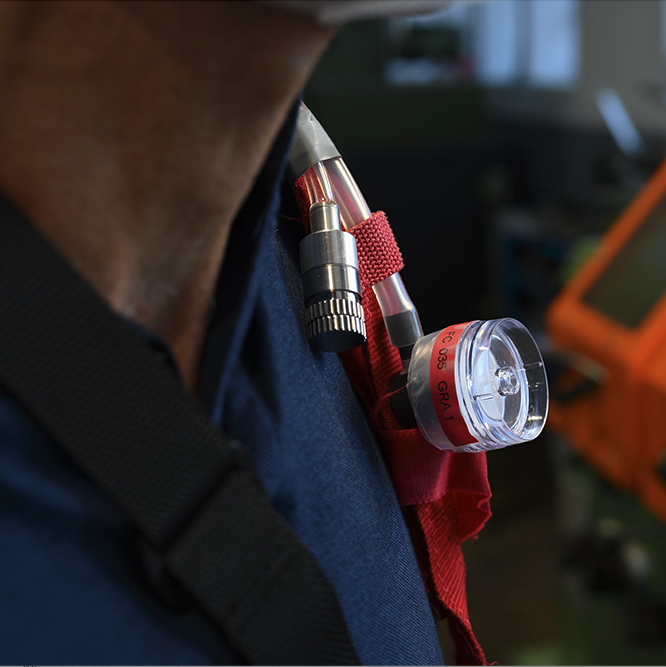
Passive gas/vapor sampling: Also called diffusive sampling, it relies on the natural diffusion of gas molecules into an adsorbent medium without the aid of a pump. Passive badges containing a sorbent and equipped with a diffusive surface (grid or membrane) through which molecules enter by molecular diffusion are used. This process is very simple to use: simply remove the badge's cap and attach it to the worker's chest during the exposure period, then close the badge to send it for analysis. Passive badges are lightweight, silent, and inexpensive, making them attractive for many uses. Furthermore, they cause no discomfort to the wearer compared to a pump.
Advantages and limitations of passive badges:
They are particularly suitable for long-term measurements (several hours up to a day) for organic vapors, providing an averaged measurement over the exposure period. However, they have some drawbacks: they are limited to gases/vapors (ineffective for dust), their sensitivity may be insufficient to detect low concentrations over short durations (e.g., it is difficult to measure a 15-minute peak with a badge), and few standardized methods validate them for the moment (only a few compounds such as toluene or NO₂ have dedicated passive NIOSH methods).
In France, the INRS has developed the GABIE badge for VOCs, containing 550 mg of activated carbon in a 45 mm diameter plastic case. Other commercial badges exist (e.g. 3M 3500 for solvents, UMEx 100 for formaldehyde, Radiello badges, etc.), each with a diffusion rate calibrated for the target substance. The user must know this rate (provided by the manufacturer) to calculate the concentration from the adsorbed quantity and the exposure time.
Summary – Gases/Vapors:
If precision and versatility are sought, active sampling (pump + tube/filter) is preferred, as it offers numerous validated methods for a wide range of compounds. If a simple, inexpensive, and non-binding method is desired, passive sampling (badge) can be used when appropriate (e.g., assessment of average exposure over 8 hours). In all cases, the choice must be made based on the target contaminant, the expected concentrations, and available reference standards.
Bioaerosols (Airborne Biological Contaminants)
Bioaerosols are particles of biological origin: living microorganisms or biological fragments/molecules. Their collection presents specific challenges, including maintaining the viability of the organisms (for culture analysis) and the range of sizes (from spores of a few microns to aggregates).
Several methods exist:
Agar impactors (Air biocollectors): These devices draw in air and impact it onto a Petri dish containing an agar medium. The particles (bacteria, fungal spores) settle on the agar according to their size and form colonies after incubation. Impactors can be multi-stage (Andersen type with 6 stages classifying by size) or single-stage (e.g., the SKC BioStage with a flow rate of ~28.3 L/min). This active method allows for the counting of viable organisms (expressed as CFU/m³). It is used for indoor air quality, hospital monitoring, etc. Its disadvantage is that it only detects microbes capable of growing in the medium used.
Impingers or liquid bubblers: An impinger is a bottle filled with a collection liquid into which a volume of air is bubbled using a pump. The bioaerosols are drawn into the liquid and trapped. The advantage is that it preserves the integrity (and even viability) of the microorganisms in the liquid, which can then be analyzed (culture, PCR, microscopy, etc.). An example is the SKC BioSampler®, a 3-piece glass impinger, which, when connected to a sonic flow pump (~12.5 L/min), can sample for up to 8 hours continuously. It is used for numerous applications (airborne infection control, environmental Legionella surveys, etc.). The liquid can be sterile water or a special non-evaporating solution that keeps the particles suspended without damaging them.
Specific filters: Bioaerosols can also be collected on a filter (e.g., sterile gelatin to keep bacteria/fungal viable, or a polycarbonate membrane for microscopic/DNA analysis). The pump draws air at ~2 L/min through the cassette-mounted filter. The filter is then either incubated (gelatin placed on agar) or processed in the laboratory (DNA extraction, electron microscopic observation for viruses, etc.). This method is simple but tends to dry out and inactivate microorganisms if sampling lasts for a long time, unless soluble (gelatin) or moistened filters are used.
Spore traps: These are cassettes with a calibrated orifice (e.g., SKC's VersaTrap cassette) into which air is drawn and projects the particles onto an internal adhesive strip. This results in a direct deposit of spores/dust onto the slide, which can be analyzed under a microscope to identify spores, pollen, etc. This process provides a total count (viable + non-viable) of biological particles, useful for allergens, non-culturable molds, etc.
In practice, the choice of biological sampling method depends on the type of analysis desired: to determine the number of live microbes present, agar (CFU) or impinger (which allows for culture or PCR) is preferred; for a total count and morphological identification, a filter or spore trap can be used.
It should be noted that there are no OELs for biological agents in France, as biological risk assessment is more qualitative. However, air sampling of bioaerosols is integrated into hygiene monitoring (e.g., to detect the presence of Legionella in the air, or to estimate the endotoxin load in a compost plant). They also make it possible to verify the effectiveness of disinfection or ventilation measures.
Choosing Sampling Equipment: Criteria and Standards
The success of reliable and representative air sampling depends on the proper selection of equipment and sampling parameters. Here are the main criteria to consider:
The type of contaminant targeted: This is the starting point. Is it non-toxic dust measured gravimetrically, organic vapors to be analyzed by GC, metals to be determined by spectrometry, asbestos to be counted under a microscope, bacteria to be cultured, etc.? Each situation dictates a specific type of media and device (specific filter, sorbent type, etc.). For example, for organic solvents, choose an activated carbon tube validated by a method (such as NIOSH 1501); for acid vapors, choose a silica gel tube or a solution in an impinger; for respirable dust, a cyclone + filter; for asbestos, a 25 mm MCE cassette, etc. Consult standards and recommendations (INRS MétroPol, ISO standards, OSHA/NIOSH methods) to determine the appropriate sampling medium for the substance to be measured.
Required sampling flow rate: Each method requires a specific air flow rate, optimized for the collection of the target fraction and trap efficiency. For example, the NF X 43-257 standard sets ~2 L/min for the 37 mm inhalable cassette, while sampling a gas through a tube may require 0.2 L/min. Fractionation devices (cyclones, impactors) have flow rates calibrated to achieve the desired size cutoff (a 10 mm nylon cyclone requires 1.7 L/min for the respirable fraction according to ISO/CEN). Therefore, it is important to choose a pump capable of providing this constant flow rate for the desired duration, even in the presence of pressure drop due to the filter or adsorbent tube. Modern pumps are flow-controlled and compensated, maintaining the flow at ±5% of the setpoint despite filter clogging.
Sampling duration: This must be sufficient to obtain a measurable quantity of contaminant, while remaining within acceptable limits (no media saturation or exceeding pump capacity). To assess an 8-hour exposure (8-hour TWA or OEL), samples are usually taken from almost the entire workstation (7-8 hours). If the workstation is shorter, the actual working time is sampled. For short-term exposures (generally 15-minute OEL-CT), shorter samples are taken (typically 15 minutes) centered on the risk periods (peak emission phase) in order to compare with the short-term limit values. Sometimes, several consecutive 15-minute samples are taken throughout the day to assess variability. Please note: the capacity of some media imposes a maximum duration – e.g. A passive badge has a range of 15 minutes to 8 hours depending on the compound and the desired sensitivity; an impinger can evaporate in >2 hours if not compensated, etc. The pump's battery must also be considered: a standard personal pump lasts ~8 to 10 hours on battery power. More powerful ATEX or mains-powered pumps are used for long durations or high flow rates.
The sampling medium (media): This is the element that will retain the contaminant. It must be chosen according to the analysis technique and the nature of the pollutant. There are:
Filters: fiber or membrane (PVC, cellulose esters, quartz, polycarbonate, etc.). Useful for collecting particulate matter (total dust for weighing, metals for analysis after acid digestion, fibers for counting). Some filters are treated or specific: e.g., PVC filter for silica (no loss on ignition), quartz filter for gravimetric sampling (thermal stability), polycarbonate membrane filter for fiber microscopy.
Adsorbent tubes: small tubes filled with adsorbent granules (activated carbon, silica, alumina, porous polymers such as Tenax, XAD, etc.). They capture vapors and VOCs through physicochemical adsorption. They often have two sections (one at the front, one at the back to indicate possible breakthrough). Choosing the appropriate sorbent is crucial (carbon for non-polar compounds, silica for polar compounds, Tenax for highly volatile VOCs/thermal traps, etc.). OSHA/NIOSH methods list the recommended tube for each substance.
Impregnated tubes and filters: contain a chemical reagent that traps the target compound through reaction. Examples: perchlorate tubes for amines, tetrahydrofuran + DNPH filters for isocyanates, chromium oxide-treated filters for H₂S, etc. These media are specific to a given toxicant and analyzed using analytical chemistry (colorimetry, HPLC, etc.).
Often, multiple media are possible for the same substance—for example, toluene can be measured on an active tube or a passive badge. The reference standard or method will guide the choice to ensure comparability of results with limit values. It is also important to check the expiration date of the media (some tubes have a limited lifespan) and the storage conditions (some samples must be refrigerated after collection, e.g., unstable compounds, biological samples).
Applicable standards and regulations: The choice of device must comply with current metrological standards. For example, in France, operator-based solid aerosol sampling must comply with standard NF X 43-257 (cassette, orientation, fixed flow rate). Similarly, ISO 13137 defines the performance requirements for individual sampling pumps (flow stability, pulsation, etc.), and ISO 7708 defines the conventions for inhalable/respirable fractions. At the strategic level, the European standard EN 689:2018 guides how to verify compliance with OELs (number of measurements, representative conditions, etc.). Using compliant equipment (e.g., an ATEX-certified pump in an explosive atmosphere) and following validated methods (Metropol INRS, INRS MTA/MAA, OSHA/NIOSH methods, etc.) guarantees the legal and technical reliability of the results.
Ergonomics and field constraints: Finally, the equipment must be adapted to the field conditions and accepted by the personnel. A pump that is too heavy or noisy, or a cyclone that is too bulky, risks bothering the worker and skewing the monitoring (they might remove it). More compact and discreet devices are preferred for long-term personal sampling. For example, modern pumps weigh a few hundred grams and are worn on the belt with a clip. Some environments require specific equipment: in ATEX zones (potentially explosive atmospheres), certified explosion-proof pumps will be used; In very dusty areas, a robust metal cyclone is preferable to a plastic one, etc.
In summary,
choosing the right equipment involves matching the right sampling device to the target pollutant, while respecting the flow rate, duration, and media prescribed by standards, in order to obtain a representative and usable sample for analysis.
Field Procedure: Preparation, Sampling, and Post-Analysis
Performing a standardized air sample follows a multi-step process that must be mastered to ensure the quality of the results. A distinction can be made between the preparation, field sampling, and post-sampling phases (submission and laboratory analysis, interpretation).
Pre-Sampling Preparation
Sampling Plan and Logistics: Before arriving on site, the sampling plan must be clearly defined (what to sample, where, for how long, from whom, and using what method). It is important to ensure that all the necessary equipment is available: charged pumps, sampling supports (filters, tubes) in sufficient quantity and not expired, accessories (cassette holders, tripods if sampling from the atmosphere, tubing, crocodile clips to secure the samplers in the breathing zone, etc.), flow calibration equipment, and documents (route sheets, sample labels, chain of custody forms). Also consider protective equipment for the sampler if they must enter a risk area (PPE, portable gas detector if there is a risk of H2S/CO, etc.).
Visual inspection and assembly of the supports: On site, in a clean area, assemble the filter cassettes (in a "3-piece" or open configuration according to the protocol), ensuring they are properly sealed. The same applies to preparing the absorbent tubes (removing the caps just before use) or filling the impingers with solution, if applicable. Each support is identified (sample code, location, time). Don't forget the blanks: prepare "field blanks" (unexposed filters/tubes, just opened and then closed) to check for possible contamination during handling. The blanks will travel with the samples and will serve as a reference for analysis.
Pump calibration: This is a crucial step. Each pump is set to its target sampling flow rate before sampling (initial calibration), using a standard flow meter (e.g., a bubble or electronic calibrator). The pump must be calibrated with the support in place on the circuit, or failing that, with a new identical support, to take into account the actual pressure drop. For example, the filter cassette is connected to the pump and the flow meter via an adapter, then the flow rate is adjusted to the desired value (e.g., 2.0 L/min). It is recommended to let the pump run for 5 minutes before adjustment to stabilize the flow. Once the flow rate is set, the initial flow rate Q1 is noted. Some modern pumps incorporate automatic calibration (e.g., the CalChek system on SKC pumps coupled with the Chek-Mate calibrator for hands-free adjustment).
Routine checks: Check the pump's condition (charged battery, stable flow rate, no leaks in the tubing). Check that the supports are properly installed and that the connections are watertight (especially important for cassettes – improperly snapping can leak and distort the sampling). Also ensure that the worker who will be wearing the device has no contraindications (equipment securely attached, no excessive discomfort).
Taking the sample in the field
Installing the equipment on the operator or in the area: For individual sampling, the sampling cassette or tube is attached to the worker's breathing zone, typically on the collar or chest (30 cm radius around the nose/mouth), using a clip. The inlet port must be facing downward or forward (according to the standard's recommendations) to prevent the entry of large debris or an aberrant flow direction. The pump is then attached to the belt or slipped into a pocket, taking care not to hinder movement (some pumps have a flat profile for belt wear). The connecting hose is neatly arranged so that it does not get caught on machinery. If sampling is carried out in the atmosphere (fixed position), the device is placed on a tripod at approximately human breathing height (~1.5 m from the ground) near the suspected source or in the center of the area.
Starting the sampling: Once the equipment is in place and accepted by the person, note the start time and then start the pump. Check that the air is flowing properly (slight drop in the ball flow meter on some cassettes, no alarm on electronic pumps). During the sampling, it is a good idea to periodically monitor the device (at least once during the day): ensure that the pump is still working (listen for the noise or see the operating indicator), that the tube has not been pinched or disconnected, and that the cassette is still in the correct position. Some devices have programmable flow rates and alarms in the event of flow rates outside the range, which facilitates monitoring.
Recording conditions: Take advantage of the sampling to note useful observations: the tasks performed by the worker (hours, nature of operations, specific incidents), environmental conditions (temperature, humidity, ventilation on or off). This qualitative information will be used to interpret the results. For passive badges, the temperature and humidity must be measured. Atmospheric pressure during sampling, as these parameters are used in the concentration calculation for this type of sampler.
End of sampling: At the end of the scheduled time (end of shift or target duration reached), note the end time and stop the pump. Before detaching the assembly from the person, it is recommended to recheck the pump flow rate with the same calibrator (final calibration). This will give a final flow rate Q2. If Q1 and Q2 vary by more than 5%, this must be taken into account (use the average Q = (Q1 + Q2)/2 to calculate the volume, or reject the sample if the difference is too large, indicating a fault). Then, carefully disassemble the supports: cap the cassette with its original caps (or clean adhesive tape) and tightly reseal the tubes with their caps. Each sample is labeled (code, duration, volume collected, field information). The passive badges are returned to their sealed packaging immediately upon completion to stop the sampling. [Sampling]
Chain of custody and shipment: After collection, samples must be properly stored until analysis. Some must be refrigerated immediately (biological samples, tubes for highly volatile or reactive compounds—e.g., isocyanates on filters—must be kept cool and in the dark). Others can be at room temperature. Place the samples in clean containers (zip-lock bags, boxes) with the associated field blanks, minimizing shock. Then, everything is shipped to the analysis laboratory as quickly as possible, along with the chain of custody sheet listing each sample, its identifier, the type of analysis requested, the date/time of collection, etc. This formal traceability (often a standard form) guarantees the legal integrity of the samples (especially in the event of litigation or official inspection).
Laboratory Analysis and Interpretation of Results
Once the samples have been analyzed by the appropriate laboratory (gravimetry, chromatography, spectrometry, microscopy, culture, as appropriate), the analysis report provides the measured contaminant quantity for each sample (in mg, fiber count, CFU, etc.). The role of the sampler/HSE technician is then to calculate the airborne concentration and compare it to the regulatory reference values:
Calculation of concentrations: For a controlled air volume sample, the average concentration is calculated: for example, if 1.5 mg of dust was collected on a filter with 720 L of pumped air, the concentration = 1.5 mg / 0.720 m³ = 2.08 mg/m³. For an adsorbent tube, the lab often provides the concentration directly (if the air volume was available). In the case of multiple samples (several periods during the day), an 8-hour weighted average can be calculated. Pay attention to the units: gases/vapors can be expressed in ppm (volume) or mg/m³ (mass); conversion is necessary if necessary (for conversion formulas based on molecular weight, see guides).
Comparison with limit values (LEP): The measured concentration is compared with the corresponding 8-hour OEL (or TLV/PEL for Anglo-Saxon standards). The 8-hour OEL is the regulatory limit for the average exposure over 8 hours. If our measurement represents a typical day, we can compare directly. For example, dust measured at 2.1 mg/m³ will be considered compliant if the 8-hour OEL is 5 mg/m³, and non-compliant if the OEL is 1 mg/m³. For short samples (15 minutes), we compare with the short-term OEL, designed to prevent the effects of short-term exposure. For example, a solvent peak over 15 minutes at 100 ppm will be assessed against the 15-minute TLV of the solvent in question.
Interpretation of exceedance or not: If the results exceed the limits, the employer is in violation for substances with a binding OEL (obligation of means and results). Immediate action is then required: investigation of causes (abnormal exposure? inadequate ventilation?), implementation of corrective measures (improvement of capture, reduction of exposure time, wearing of respiratory protection). Even if the results are below the limits, they must be used to continuously improve prevention, as the law requires reducing exposure to the lowest possible level, and compliance with an OEL does not imply a total absence of risk.
Taking uncertainty into account: All measurements contain uncertainty. Laboratories sometimes provide an expanded uncertainty (e.g., ±20%). If the result is close to the OEL, caution is advised. The EN 689 standard recommends rules (e.g., if the CI of the mean exceeds the OEL, exposure is not controlled). In an educational context, it should be explained that a result of 48 mg/m³ for an OEL of 50 mg/m³ does not mean "everything is fine" – it's at the limit, and fluctuations can lead to it being exceeded on another day.
Absence of OEL: For substances without an official OEL (e.g., biological agents, certain emerging VOCs), other benchmarks should be used: guideline values (proposed by ANSES, ACGIH, etc.), comparisons to usual background values, or a simple ALARA (as low as reasonably achievable) principle. For example, there is no OEL for bacterial endotoxins: this should be interpreted in relation to indicative values in the literature (~90 EU/m³ as a level not to be exceeded to avoid chronic symptoms).
The interpretation of the results also includes communication: a clear report is submitted, detailing the sampling conditions and the conclusions. These results are forwarded to the occupational physician and the CHSCT/CS. They will be used when updating the risk assessment and the prevention action plan.
Integrating Sampling into an HSE/QHSE Management Plan
Air sampling is not just a one-time measure: it is part of the company's HSE management system, linked to quality (QHSE), particularly in laboratories or industries concerned with product and process compliance. Here's how these practices fit:
Initial assessment and single document: During the initial chemical/biological risk assessment, air measurement campaigns allow exposures to be mapped by workstation. This data is used to feed into the single document (DUERP) by identifying at-risk workstations and exposure levels. For example, workstations can be classified according to whether exposure is > 1/2 OEL, < 1/10 OEL, etc., which guides action priorities (EN 689 provides decision criteria for this purpose).
Periodic monitoring plan: For employees with a regulatory OEL, French law requires annual monitoring by an accredited organization. Beyond this requirement, the company can establish its own monitoring plan: for example, biannual measurements of solvents in the paint shop, quarterly measurements of wood dust in the joinery, etc. This allows for verification of the long-term effectiveness of protective measures (extraction systems, humidification, etc.) and the detection of any deterioration. This plan must be formalized (frequencies, substances, methodologies) and integrated into the annual HSE schedule.
Continuous improvement and corrective actions: Sampling results are used during HSE management reviews and CSE meetings. If the limits are exceeded, actions are decided (process modifications, machine enclosure, additional ventilation, increased mask use, etc.). Once these measures are implemented, new samples are taken to verify the improvement achieved. For example, after installing a new localized extraction system, vapor concentrations will be re-measured to ensure they have fallen below the OEL.
Traceability and database: All atmospheric measurements should be documented and archived. In France, accredited organizations submit the results to the national SCOL database. The company will maintain an internal record of exposure measurements. This traceability is valuable in the event of an occupational illness (to document an employee's exposure history) or an ISO 45001 regulatory audit.
QHSE integration: In a comprehensive QHSE system, air sampling is one of the HSE performance indicators (rate of compliant workstations, changes in dust levels, etc.). They also contribute to quality: for example, monitoring the air in a cleanroom (dust, VOCs) is a matter of both Product Quality and Personnel Hygiene. A well-designed air monitoring plan can therefore serve several purposes (ensure that the air does not contaminate a sensitive process, and simultaneously protect employees).
Training and safety culture: Incorporating these practices also means regularly training staff (technicians, operators) on the importance of these measures and how they can help (properly carrying pumps, reporting any alarms, etc.). This raises awareness of the possible presence of invisible pollutants and establishes a culture of prevention based on scientific measurement.
In short, atmospheric sampling campaigns are a risk management tool that provides factual data for HSE management. They allow for verification of the effectiveness of technical and organizational measures and rapid response if exposure exceeds thresholds. Integrated into a QHSE plan, they contribute to achieving workplace safety and regulatory compliance objectives, while also supporting the quality approach (environmental monitoring).
Compatibility with SKC Inc. Equipment – Concrete Examples
SKC Inc. is a leading manufacturer of industrial hygiene equipment, particularly for air sampling. Many SKC devices and consumables can be used to implement the sampling procedures described above. Here are some examples of SKC equipment suitable for different types of contaminants and methods:
Individual Sampling Pumps: SKC offers robust pumps for active sampling, such as the AirChek® range. For example, the SKC AirChek 52 pump offers an adjustable flow rate from 5 to 3000 mL/min and a runtime of >12 hours, suitable for daily dust or gas sampling. It can also be used with filter cassettes, particle selector cyclones, sorbent tubes, or impingers. Other models, such as the AirChek TOUCH (connected, touchscreen) or the Sidekick (compact ATEX pump), cover flow rate requirements from a few mL/min up to 5 L/min. These pumps are often supplied in complete kits (case with charger, mounting bracket, calibration flow meter, etc.).
Filter cassettes for dust/fibers: SKC sells standard filter holders (25, 37, or filter cassettes) compatible with OSHA/NIOSH methods. For example, SKC's 37 mm styrene 3-piece cassette, pre-loaded with a 0.8 µm MCE filter, complies with NIOSH, OSHA, and EP standards. For asbestos, SKC offers 25 mm cassettes pre-loaded with 0.8 µm MCE filters, sealed and meeting phase contrast microscopy specifications. IOM Supports: SKC also distributes the reusable, conductive plastic IOM sampler (25 mm) for the inhalable fraction, invented by the Institute of Occupational Medicine.
Cyclones and Particle Selectors: For the respirable fraction, SKC supplies several types of cyclones: the Dorr-Oliver 10 mm nylon cyclone (flow rate ~1.7 L/min) traditionally used in mines and by the OSH, the 37 mm aluminum cyclone (flow rate 2.5 L/min), or the GS-3 plastic cyclone. These cyclones fit onto the cassettes and provide the desired particle size cut. SKC also offers custom impactors such as the Parallel Particle Impactor (PPI) calibrated on 4 channels, or the Sioutas Cascade Impactor for more detailed size distribution analyses.
Sorbent Tubes and Cartridges: SKC pioneered the commercialization of NIOSH sorbent tubes. The SKC catalog contains a full range of pre-filled tubes (activated carbon: ref. 226-01 for most solvents, silica gel: ref. 226-10 for alcohols, Anasorb PVC, Chromosorb, XAD-2, etc., as well as double-layer tubes for specific compounds). SKC also provides cartridges (size L) treated for certain gases: e.g., DNPH cartridges for aldehydes, OVS (OSHA Versatile Sampler) cartridges combining filter and sorbent for pesticides. Each SKC tube/cartridge comes with lot information and can be searched in the SKC online guide by target pollutant.
Bubblers/impingers: SKC offers graduated 25 mL midget-type glass impingers with straight or fritted tips (to improve absorption). They also sell unbreakable PFA (fluoroplastic) impingers for corrosive substances or extreme temperatures. A holster accessory allows the impinger to be attached to the worker without the risk of spillage. For example, a 225-36 midget glass impinger coupled with an AirChek pump can be used to trap chlorine in a KI solution. For low-flow active gas sampling needs, SKC has Low Flow kits that allow the use of standard pumps at flow rates <500 mL/min (multiple tube holders with constant pressure regulators).
Passive Badges: SKC distributes several passive badges, including the 3M range (e.g., 3M 3500 for solvents), and develops its own models. can cite the SKC UMEx 100 badge for formaldehyde and other aldehydes (DNPH sorbent impregnated inside, equivalent mentioned above. SKC also offers Shelton badges for NO₂, BioBadge carbon diffusion tubes, etc. A passive selection guide is available on their site to find the appropriate badge according to the compound sought.
Bioaerosol equipment: SKC has a dedicated Bioaerosol range. The SKC BioSampler® (described previously) is one of the flagship products for collecting viable biological agents in liquid. In addition, the SKC BioStage is a single-stage impactor that can be used with standard Petri dishes (for example, a 5-minute sample at 28.3 L/min, yielding the viable load in CFU/m³). SKC also sells pre-assembled cassettes for total fungal spore collection, such as the VersaTrap cassette (and the Air-O-Cell in distribution), where the adhesive slide is analyzed under a microscope. For inhalable biological dusts, there is the stainless steel Button Sampler (381-hole sieve) calibrated at 4 L/min to efficiently collect particles down to 100 µm – this filter holder is useful for endotoxins, for example.
Calibrators and Accessories: The SKC range includes flow calibrators such as the SKC Chek-Mate (electronic ball) or soap flow meters, as well as a whole series of accessories: mounting brackets, tripods, clamps, connecting tubes, and monitoring software (e.g., DataTrac to retrieve data from connected pumps).
In practice,
all the equipment needed for a multi-contaminant sampling campaign can be obtained from SKC. For example, a complete dust + vapor kit will include an AirChek pump, a filter holder for inhalable dust, a cyclone for respirables, pre-loaded filter cassettes, a set of various sorbent tubes (carbon, silica), a set of passive badges, and calibration tools. The advantage of compatibility is that SKC components are designed to work together in a leak-proof and reliable manner. In addition, SKC provides detailed technical data sheets and equivalence guides (e.g., Which SKC tube corresponds to OSHA Method X or NIOSH Method Y, facilitating the adoption of standards.
Concrete illustration:
Let's suppose that technicians are trained to measure solvents (VOCs) and wood dust simultaneously. Two SKC AirChek pumps can be used: one with a 37 mm cassette + PVC filter for wood dust (flow rate 2 L/min), the other with a tube holder + activated carbon tube for solvent vapors (flow rate 200 mL/min via the Low Flow kit). Both pumps can last 8 hours without refilling. At the end of the day, the filter will be weighed (gravimetric, comparison to the wood dust OEL = 1 mg/m³) and the tube will be analyzed by GC (compared to the 8-hour OEL of the measured solvents). All this equipment – pumps, cassette, tubes – is available from SKC, ensuring interoperability and reliability of the entire system. sampling.