<>Blanc-Labo S.A. your laboratory equipment specialist

Buying guide: industrial stainless steel fermenter
Total Cost of Ownership (TCO), Reliability and Technology Comparison R&D, pilot and production phases
The challenge: Manufacturers' proposals are polarized between "all-disposable" solutions (explosive operating costs) and proprietary over-engineering (prohibitive acquisition costs and software lock-in).
The real cost: Single-use systems (SUTs) generate massive recurring expenses (up to $8,000 per ladle), making stainless steel far more cost-effective for long-term production.
The Blanc-Labo solution: An approach inspired by Lean engineering (Toyota reliability). We combine robust 316L stainless steel tanks with an open Siemens S7 architecture and world-class components, delivered in 4 to 7 months, at low prices.
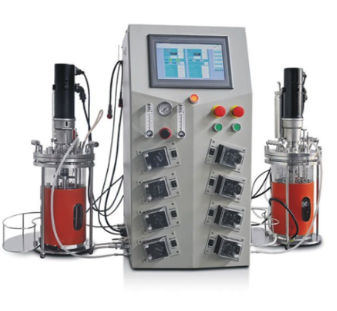
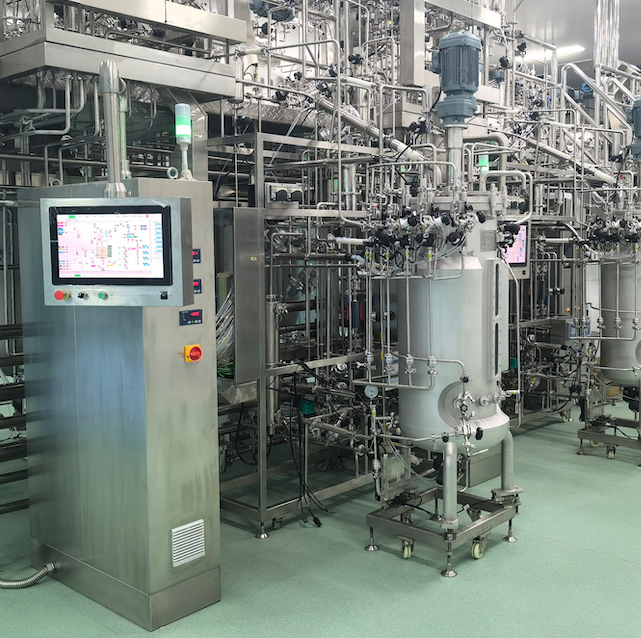
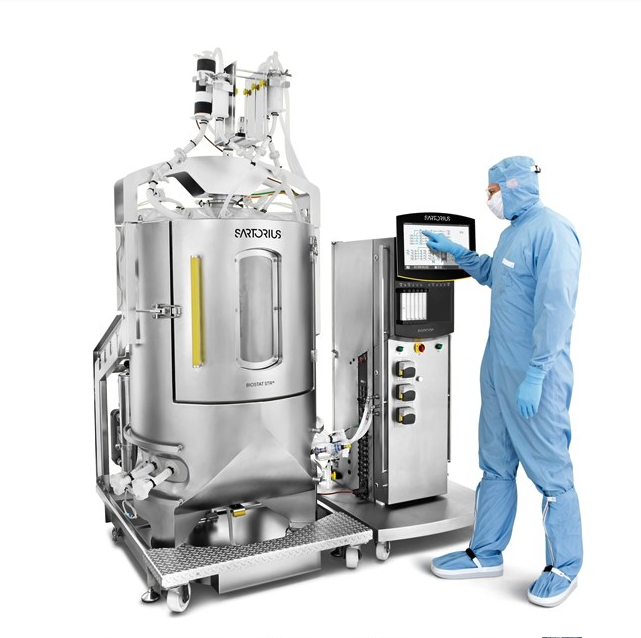
Examples of the 3 most common types of fermenters/bioreactors: a benchtop fermenter with a glass tank, in TWIN configuration, a 300L "single-use" bioreactor, and a 300L stainless steel fermenter with SIP and CIP.
Understanding the Total Cost of Ownership (TCO) in bioproduction
For a smart purchase during the transition from R&D to pilot and production phases, the initial purchase price is not enough. The Total Cost of Ownership (TCO) must be analyzed over 5 to 10 years.
The Single-Use (SUT) trap: although the initial investment is lower, the costs of consumables (pre-sterilized bags, disposable sensors) accumulate quickly. On a large scale, these recurring expenses quickly exceed the cost of a reusable system.
The advantage of stainless steel: a stainless steel fermenter requires a larger initial investment for infrastructure (CIP cleaning and SIP sterilization), but it offers unbeatable long-term profitability for large volumes and continuous production.
Overall, Single-Use is considered acceptable for small-scale production and/or for active pharmaceutical ingredients that command a high selling price. It is then possible to adjust the selling price based on a high TCO (Total Cost of Ownership).
On the other hand, for bioprocesses that produce inexpensive substances per kilogram, such as bio-inputs, CO2 valorization, the production of by-products for animal or even human food, biofuel production, etc., the economic viability of the project depends heavily on the efficiency of your process and the initial investment.
Comparative strategy of manufacturers
And why the market needs a new alternative
The table below summarizes the product strategy of the major market players, and the one chosen by Blanc-Labo:
Manufacturer | Products strategy | Limits for an industrial user |
Sartorius | Transition to 100% single-use (STR range) and discontinuation of BiostatCplus stainless steel equipment | Total dependence on expensive consumables and limitations on pressure for dense microbial cultures. |
Eppendrof | Single-use systems with rigid walls (BioBLU) to facilitate preparation. | Strict scale barrier (limited to 40 L for microbial growth), unsuitable for mass industrial production. |
Pierre-Guerin | Custom-made ultra-premium stainless steel (PRIMO and EVO ranges). | Very high acquisition costs and dependence on the proprietary NEPTUNE SCADA control system. |
Blanc-Labo | Standardized stainless steel tanks equipped with premium European components and Siemens S7 open automation | Requires a conventional steam (SIP) and purified water infrastructure for stainless steel. |
Blanc-Labo fermenters: the smart purchase for your bioprocesses
Why pay for a Mercedes when a Toyota will do?
We offer the Toyota of fermenters: robust, with all the necessary options, but without the extra costs of the big brands. Volumes from 0.3 to 50,000 liters and four key advantages:
Optimized budget: up to 60% less expensive than leading brands that offer high-quality equipment but are focused on pharmaceutical requirements.
Short lead times: from 2 to 8 months, approximately 6 months faster than our competitors.
European quality: all our fermenters comply with European standards. All key components are from European or US brands: Siemens S7 PLC for an open architecture, Watson-Marlow pumps, Hamilton sensors, Blue Sens gas analyzers, Vötglin mass flow controller, Sartorius sterile filters, Gemü valves and membranes, BlueVIS calculation module and sensor software.
Zero Risk: Our local teams install and maintain your equipment from our bases in Lausanne or Bordeaux. 24-month warranty and insurance provided by Blanc-Labo. Spare parts stocked in Lausanne and Bordeaux.
See our range of fermenters in this video.
See all our fermenters and bioreactors on this product page.
Unlike manufacturers who lock you into closed ecosystems, acquiring a Blanc-Labo fermenter means choosing an open software architecture (Siemens S7-1200 or S7-1500) that will allow for future upgrades at a lower cost. And of course to integrate the "best-in-class" components (pumps, sensors, mass flow meters, gas analyzers, ...) that you have chosen.
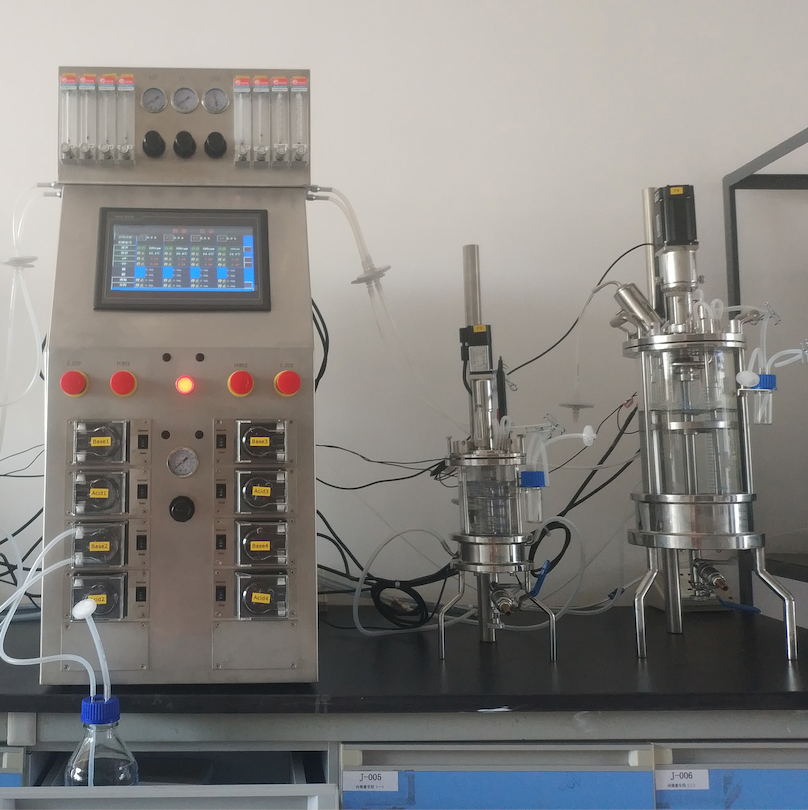
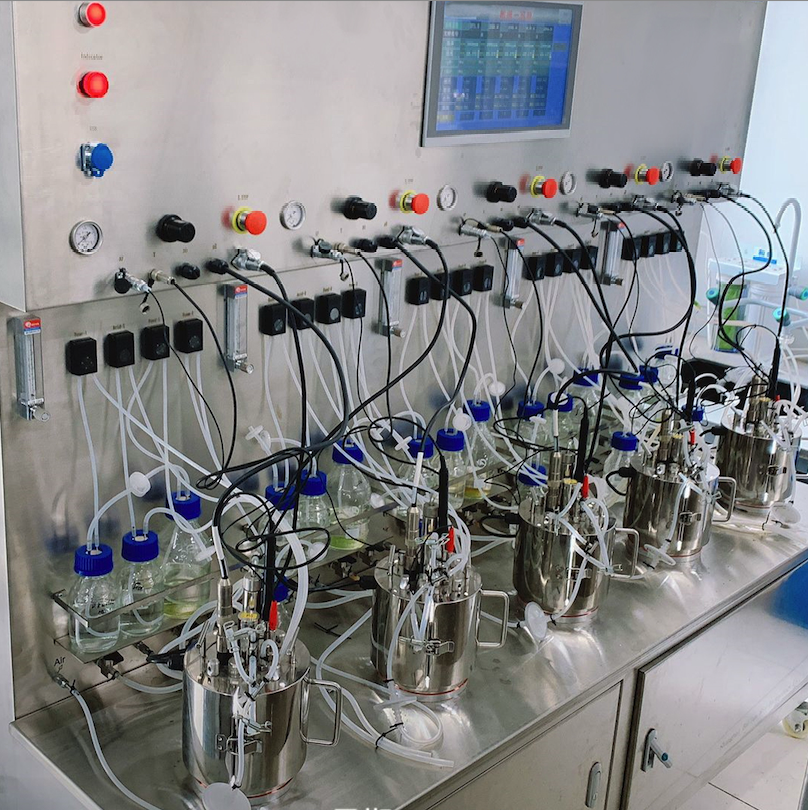
Below left a TWIN benchtop fermenter with 2 tanks of 1L and 3L for chemical and thermal enzymolysis, and on the right 5 2L photobioreactors for algae.
The Blanc-Labo development process
From Design to Qualification on Your Site
Watch these 5 videos that visually explain our complete process
With 36 years of experience in Switzerland and France, Blanc-Labo completely eliminates the risk to your investment.
Responsiveness: Complete technical quote provided within 72 hours.
Transparency: Rigorous technical validation with P&ID drawings and 3D modeling to ensure seamless integration into your laboratory.
Fast Delivery: A complete cycle of 4 to 7 months, from order to final qualification (FAT/SAT) on your site.
Training and Support: Dedicated local after-sales service and comprehensive training for your teams.
We begin preparing the first draft of the quote as soon as we receive your specifications. If you don't have them, you can complete our online sizing questionnaire. We will analyze your answers together during an initial meeting.
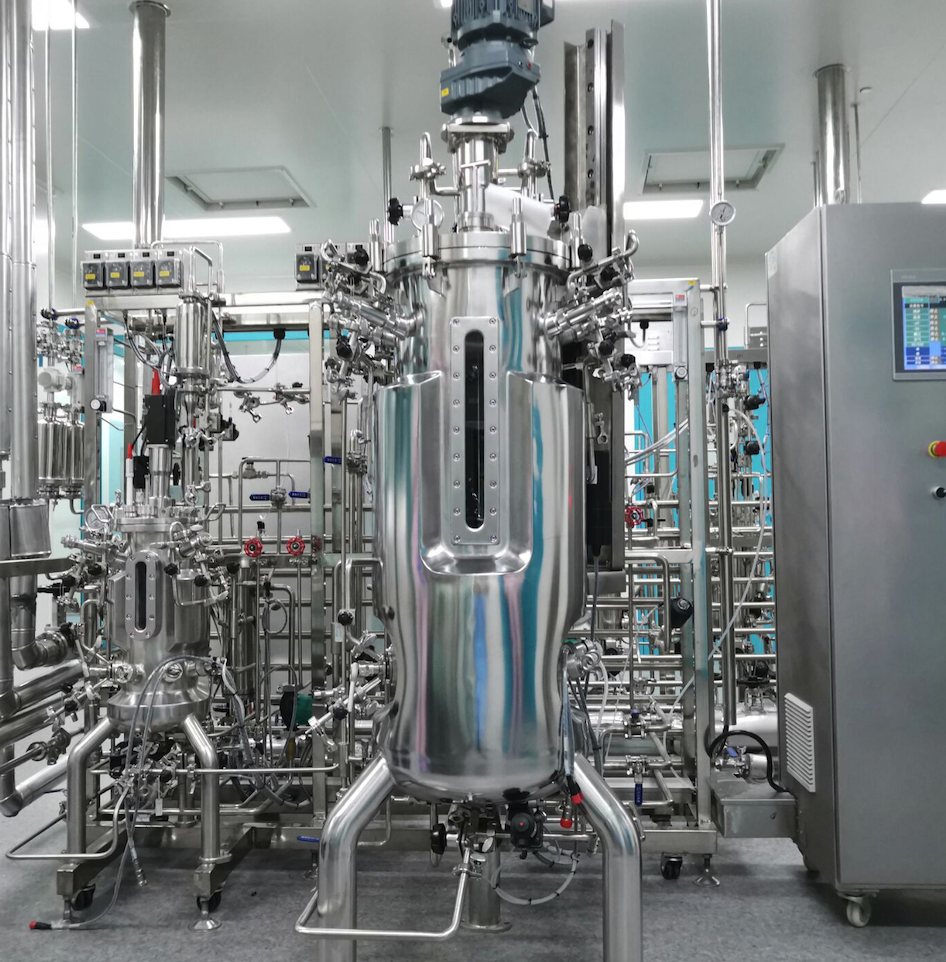
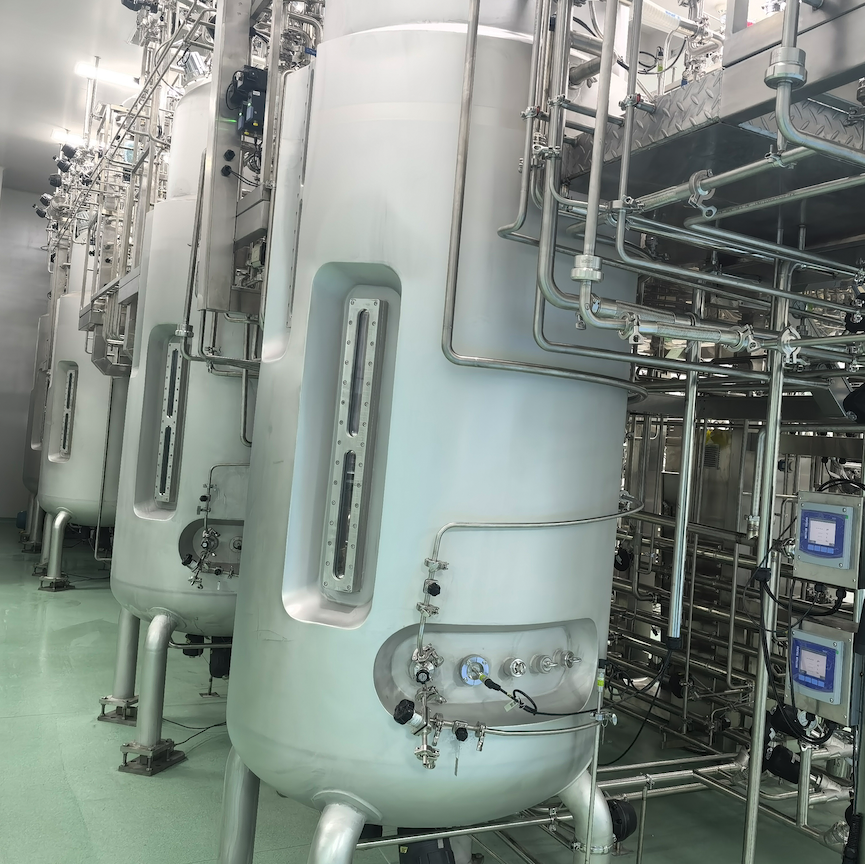
Below left are 2 GMP stainless steel fermenters of 10+100L for scale-up, and on the right are 4 fermenters of 2000L for cell culture.
FAQ (Frequently Asked Questions)
Why choose an open Siemens S7 architecture for your bioreactor?
Legacy or closed systems pose obsolescence and security risks. The Siemens S7 platform (1200/1500) offers unparalleled computing power, universal connectivity (Profinet, OPC-UA) for Industry 4.0, and ensures you retain ownership and control of your automation code.
Stainless steel or single-use for scaling up?
For R&D and small clinical batches, single-use technology (SUT) is agile. However, for industrial scaling up (>40L in microbial batches) or continuous production, the cost of disposable bags makes operating expenses (OpEx) unsustainable. Stainless steel (up to 50,000 L) guarantees the best long-term cost-effectiveness and tolerance to the high pressures required for fermentation.
What is the delivery time for a white-lab fermenter?
Thanks to our proven component base and streamlined process, we design, assemble, and qualify a custom stainless steel fermenter in 4 to 7 months, including FAT and SAT testing.
For benchtop or multiple systems, this timeframe is typically 8-10 weeks.
For stainless steel fermenter assemblies (for scale-up), add 2 to 3 months.
What is the price of a Blanc-Labo fermenter?
Each fermenter is essentially a custom-made piece of equipment. Its price therefore varies greatly depending on your exact requirements. That said, here are some examples of prices and delivery times for specific configurations:
Benchtop Fermenters and Bioreactors
5L single-wall glass benchtop fermenter. Price: €25,000. Delivered and installed in 10 weeks.
TWIN 2x5L benchtop fermenter. Price: €53,000. Delivered and installed in 12 weeks.
15L single-walled glass benchtop fermenter. With accessories. Price: €29,600. Delivered and installed in 11 weeks.
2L double-walled glass fermenter. Price: €23,400.
Stainless steel pilot fermenters
500L stainless steel fermenter. GMP version. With integrated sterilization and cleaning (SIP and CIP). Price: €320,000. Delivered and installed in 10 months.
Stainless steel scale-up unit with three fermenters: 10L, 100L, and 2000L. With SIP and CIP. Price: €453,000. Delivered and installed in 10 months.
50L stainless steel fermenter. With SIP and CIP. Price: €130,000. Delivered and installed in 17 weeks.
Stainless steel scale-up unit with 3 fermenters (40L, 600L, and 3000L) and 2 storage tanks (20m³). GMP compliant. Price: €1,914,000. Delivery in 36 weeks.
Parallel fermenters
12 x 1L fermenters in parallel. Price: €108,000. Delivered and installed in 12 weeks.
16 x 0.5L fermenters. With numerous sensors. Price: €399,000. Delivered and installed in 12 weeks.
8 x 0.5L fermenters. Price: €189,000. Delivered and installed in 12 weeks
Algae Fermenters
2L fermenter with light, 50 to 200 micromoles/m²/s. Price €26,000. Delivered and installed in 13 weeks.
Do you have a calculation module for generating "soft sensors"?
Yes, to create and use soft sensors, we equip our fermenters with BlueVis 4.0 software from BlueSens. Its full functionality is only available if you also purchase the BlueInOne or BlueVary gas analyzer.
This software features an OPC server that allows for real-time analysis of data from the fermenters. It calculates OUR, CER, RQ, kLa, and biomass estimation (soft sensor) in real time.
You can also use your existing soft sensors, such as biomass X, OUR/CER, qO2, incoming substrate, instantaneous productivity, and specific growth rate (µ).
BlueVis transforms a standard fermenter into an intelligent bioprocess system capable of providing real-time biomass, metabolic activity, and feed control indicators without adding costly instrumentation.
You can then implement control laws based on one or more soft sensors, as in the following examples:
Fed-batch control by estimated µ
Feed control by RQ
Control by OUR (or DO + OUR) to stay just below an O₂ limit
Phase control (automatic transition detection)
Do you have a calculation module for generating "soft sensors"?
Yes, to create and use soft sensors, we equip our fermenters with BlueVis 4.0 software from BlueSens. Its full functionality is only available if you also purchase the BlueInOne or BlueVary gas analyzer.
This software features an OPC server that allows for real-time analysis of data from the fermenters. It calculates OUR, CER, RQ, kLa, and biomass estimation (soft sensor) in real time.
You can also use your own "soft sensors" such as biomass X, OUR/CER, qO2, incoming substrate, instantaneous productivity, and specific growth rate (µ).
BlueVis transforms a standard fermenter into an intelligent bioprocess system capable of providing real-time biomass, metabolic activity, and feed control indicators without adding costly instrumentation.
You can then have control laws based on one or more soft sensors, as in the following examples:
Fed-batch control by estimated µ
Feed control by RQ
Control by OUR (or DO + OUR) to stay just below an O₂ limit
Phase control (automatic transition detection)
What features does the BIOWIT software offer?
All our fermenters are controlled by a SIEMENS S7 PLC. It is a stable and universal PLC, suitable for a variety of automation applications, particularly for controlling manufacturing processes. It is easy to network; it is the control unit for your fermenter.
You can therefore display all the information from the software either on the unit's 10" touchscreen or on a remote computer: process data transmission, process visualization, recorded samples, process parameters, etc.
You can also benefit from all the standard peripherals offered by Siemens to integrate your fermenter into an internal industrial network.
The Siemens PLC allows data exchange via Profinet or OPC-UA with a SCADA-type supervisor.
The BIOWIT control software was developed based on Siemens S7+ Force Control.
This ensures high scalability over time should your needs change.
It is compatible with numerous actuators and sensors from various manufacturers, guaranteeing the fermenter's adaptability to your evolving requirements.
The software is in English (French optional).
The main screen is an ergonomic overview that allows for a very simple visualization of the fermenter's status and all valves at any given time (SCADA type).
By default, all the most common functionalities are installed in the software:
Process control: either manual or software-controlled according to your recipes.
The software can control all actuators (rotameters, pumps, agitation, aeration, heating, or cooling) using rules you define and values read from the various sensors.
You can choose between PID or continuous logic.
Cascade-type rules are possible.
User and password management.
Sensor calibration.
Instantaneous status visualization of actuators and sensors via an overview.
Alarms.
Data storage and export for each batch.
Semi-automation of the process through the creation of cascade rules.
What sensors are installed on Blanc-Labo fermenters?
We install Hamilton sensors with RS485 Modbus connectivity: pH, Dissolved Oxygen (pO2), Optical Density, ORP, etc.
Temperature and foam level sensors are manufactured by Bailun.
We install BlueSens gas analyzers.
What type of agitation is possible?
In practice, all agitators are available for Blanc-Labo fermenters. They are easily removable and repositionable. You can change them frequently depending on the progress of your work.
The table below shows the most commonly chosen agitators;
Type of culture | Most common agitator | Shear level | O₂ transfer capacity | Typical use | Remarks |
Animal/human cells | Marine impeller / inclined helix | Very low | Average | CHO, HEK, stem cells | The main goal is to protect the cells |
Bacteria | Rushton turbine | Pupil | Very high | E. coli ,Bacillus | Very good kLa, widely used in aerobic fermentation |
Yeasts | Pitched blade OrRushton | Medium to high | High | Saccharomyces ,Pichia | Good compromise between mixing and oxygenation |
Filamentous fungi | Marine Orwide inclined blade | Low to medium | Average | Aspergillus ,Trichoderma | Avoid breaking the mycelium |
Algae / microalgae | Marine or gentle agitation | Weak | Low to medium | shear-sensitive crops | Often, airlift or bubble column are preferred. |
Viscous media | Anchor ,helical ribbon | Low to medium | Weak | thick broths, polymers, dense biomass | Good overall mix, less good for kLa |
Versatile stainless steel processes | Pitched blade + Rushton combined | AVERAGE | High | multi-purpose industrial tanks | Very common in industrial design |
Simple rule to remember when choosing a stirrer:
Rushton: when you want to maximize oxygenation. With a turbine diameter 0.3 to 0.4 times the vessel diameter.
Marine: when you want to protect the cells (0.35 to 0.5 times the vessel diameter).
Pitched blade: when you want a compromise.
Anchor/helical ribbon: when the medium is very viscous.
What is the kLa of Blanc-Labo fermenters?
The kLa of a bioprocess depends heavily on the process parameters. However, users always ask us for kLa values for our fermenters.
Below you will find examples of kLa values for 5 different fermenters, when filled with water with 50% O2 + 50% Air aeration from 4 VVMs, equipped with 2 Rushton agitators (3 on the largest) and 3 or 4 counter-blades:
Type of fermenter | H/diam | Diam Rushton | rpm | kLa (1/h) |
3L glass | 2.5 | 50mm | 1000 | 300-350 |
5L glass | 2 | 60mm | 1000 | 400-430 |
10L steel | 2.5 | 80mm | 800 | 480-520 |
100L steel | 2.5 | 140mm | 700 | 680-720 |
2000L steel | 2.5 | 2x400 + 1x300 mm | 250 | 780 -820 |
What tank shape should I choose?
A wide range of tanks are available, from 0.2L to 50,000L, in stainless steel or glass (single or double wall). Stainless steel tanks are made of 316L for the part in contact with your products and 304L for the double wall.
The tank shape depends on your needs. We generally find that our clients request tall tanks (H/D ratio around 2.5 to 3) for bacteria and molds. For cells, tanks are wider (H/D ratio of 2). However, there are exceptions depending on your requirements.
Remember the simple rule: the higher the H/D ratio, the better the oxygen transfer. Conversely, lower H/D ratios limit shear stress.