<>Blanc-Labo S.A. your laboratory equipment specialist

How to Choose the Optimal LED Lighting for Your Phytotron: A Comprehensive Guide
Request our "Choosing LEDs" white paper -->
The best light sources to boost plant growth
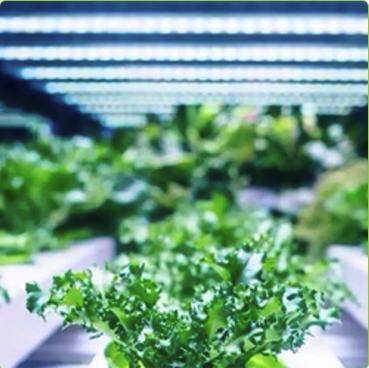
WHAT ARE THE BEST LIGHT SOURCES FOR PHOTOSYNTHESIS?
Photosynthetic organisms, such as plants and algae, use electromagnetic radiation from the visible spectrum to drive the synthesis of sugar molecules.
Special pigments within plant cell chloroplasts absorb energy from specific light wavelengths, triggering a molecular chain reaction known as the light-dependent reactions of photosynthesis. The most effective visible light wavelengths for photosynthesis fall within the blue (425–450 nm) and red (600–700 nm) ranges.
Consequently, the ideal light sources for photosynthesis are those that emit light in the blue and red ranges. In this study, we used a spectrophotometer to collect spectra from four different light sources. This allowed us to determine the wavelengths emitted by each source and assess their relative intensities.QUELLES SONT LES MEILLEURES SOURCES DE LUMIÈRE POUR LA PHOTOSYNTHÈSE ?
Les organismes photosynthétiques, tels que les plantes et les algues, utilisent le rayonnement électromagnétique du spectre visible pour stimuler la synthèse des molécules de sucre.
Des pigments spéciaux dans les chloroplastes des cellules végétales absorbent l'énergie de certaines longueurs d'onde de la lumière, provoquant une réaction en chaîne moléculaire connue sous le nom de réactions dépendantes de la lumière de la photosynthèse. Les meilleures longueurs d'onde de la lumière visible pour la photosynthèse se situent dans la gamme bleue (425-450 nm) et la gamme rouge (600-700 nm).
Par conséquent, idéalement, les meilleures sources lumineuses pour la photosynthèse émettent de la lumière dans les gammes bleue et rouge. Dans cette étude, nous avons utilisé un spectrophotomètre pour collecter des spectres provenant de quatre sources lumineuses différentes. Cela nous a permis de déterminer les longueurs d'onde émises par chaque source et d'avoir une idée de leurs intensités relatives.
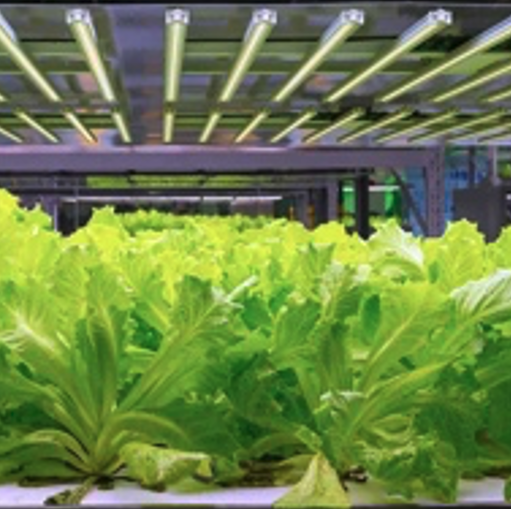
PAR (Photosynthetically Active Radiation)
Photosynthetically Active Radiation (PAR) refers to the solar radiation wavebands between 400 and 700 nanometers that photosynthetic organisms can utilize during the process of photosynthesis. All wavelengths between 400 and 700 nm contribute to photosynthesis, and these wavelengths carry information about the plant's environment.
CRI (Color Rendering Index)
The Color Rendering Index (CRI) is a quantitative measure of a light source's ability to reveal the colors of various objects compared to an ideal or natural light source.
CRI can be used to estimate suitability for human eye adaptation to light; working with values below 50 for extended periods is considered difficult.
Spectral models and optimal LED selection
The composition of the light received by crops is crucial not only for providing the energy needed for photosynthesis but also for ensuring that various plant life processes unfold optimally. Horticultural LED fixtures offer the ideal solution, as the range of available spectra allows them to cover the entire electromagnetic light spectrum. A sound approach is to start with a base of white light and then add specific light spectra to boost particular areas, thereby creating a custom spectrum perfectly tailored to the specific crop.
You can choose from eight different spectra and have us mix LED bars to meet your requirements on the multi-channel LED panels that will illuminate your plants during their growth.
Whether for "reach-in" chambers (phytotrons) or "walk-in" rooms, we offer custom-made solutions covering surface area, dimensions, intensity, and spectrum.
LEDs are far more versatile than fluorescent tubes: they consume less energy and emit less heat—minimizing their impact on growing conditions—and allow for maximum vertical space for plant development.
The product's spectral composition can be fully customized based on the type of plants you are growing—including intensity, color temperature, and spectral mix—to suit specific growth patterns and objectives.
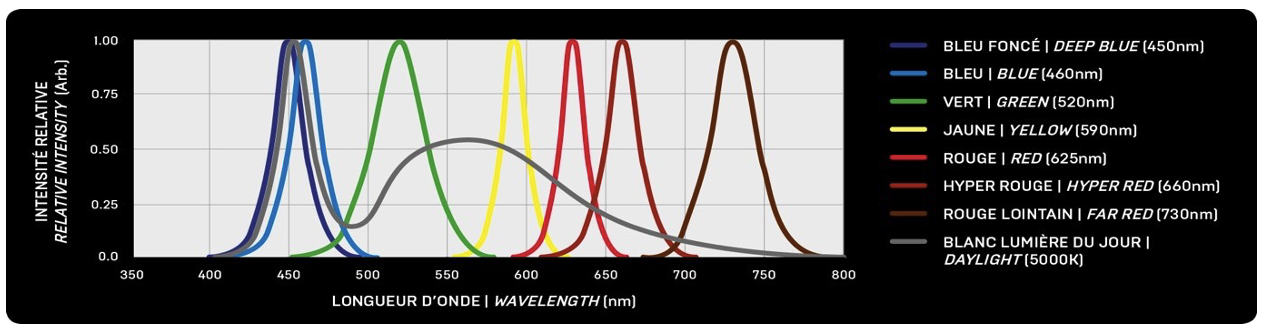
How to choose your LED color
Whether for reach-in or walk-in growth chambers, we offer custom-made solutions tailored to your specific needs regarding surface area, dimensions, intensity, and spectrum.
LEDs are far more versatile than fluorescent tubes: they offer lower energy consumption and reduced heat emission—minimizing their impact on growing conditions—and allow you to maximize vertical space for plant development.
The product's spectral composition can be fully customized based on the type of plants you are growing—including intensity, color temperature, and spectral mix—as well as the specific growth type and objectives you wish to achieve.
1. Full Spectrum
Full spectrum lighting is suitable for all stages of plant growth.
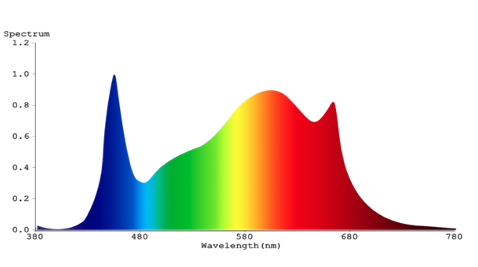
Full spectrum, CRI 87; promotes optimal growth during germination, the vegetative stage, and flowering.
It is safe for the user's eyes. It enhances nutrient uptake in plants during the vegetative growth phase. It maximizes red and blue light—improving chlorophyll A and B absorption—while incorporating a small amount of green wavelengths to allow for much deeper canopy penetration. Additionally, it supports photosynthesis at every stage, from propagation to flowering.
2. Spectrum optimized for flowering
The flowering spectrum is a light spectrum designed for growers who cultivate only autoflowering varieties.
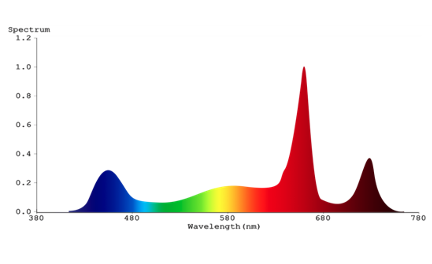
Furthermore, this spectrum is intended for use solely during the flowering and maturation phases; it peaks in the 660nm red range, thereby enhancing the flavor, quality, and yield of the final harvest.
The flowering spectrum stimulates flowering using far-red light at 730 nm. (Optional)
3. Propagation Spectrum
LED grow lights featuring a propagation spectrum are suitable for germination and propagation applications due to their low light density per square centimeter of tube surface area; this ensures the plants are not damaged.
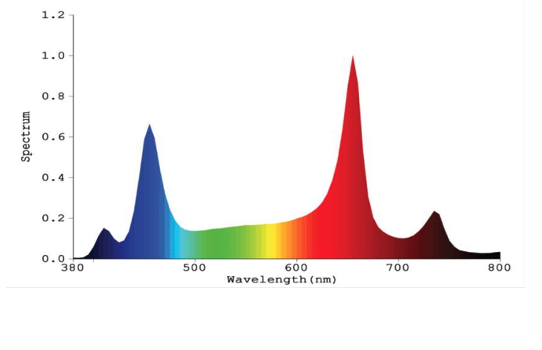
The two available light spectra maximize the blue component—with peak intensity at 450 nm, which is essential for vegetative growth—as well as the red component, which is vital for germination and root development.
However, based on user experience, a certain balance of green light is maintained within the spectrum, promoting better canopy penetration and contributing to improved nutrient absorption and metabolism.
4. Infrared + Far-Red Spectrum
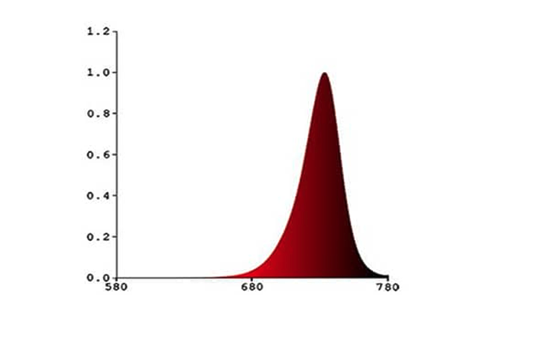
The LED channel with the FAR (Far-Red) spectrum emits far-red light at a wavelength of 730 nm. When the red-to-far-red ratio is low, it causes plant elongation—particularly in crops exposed to direct light—and triggers flowering under long-day lighting schedules. Plants reflect far-red light much more than red light.
5. Optimized Ultraviolet Spectrum
Or, how to boost plant resilience.
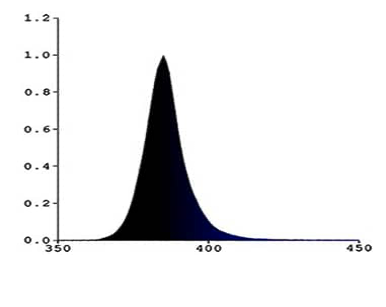
The LED channel featuring the UVA spectrum emits ultraviolet light at a wavelength of 385 nm. To protect themselves from the effects of ultraviolet rays, plants have developed a natural defense mechanism—trichomes—composed of alkaloids and flavonoids that act as photoprotective molecules. Ultraviolet emission contributes, for instance, to the resistance of roses against pathogens, herbivores, and the white mold caused by the fungus Podosphaera pannosa, ensuring that rose crops grow healthier and more vigorously.
Furthermore, terpenes are aromatic molecules that convert ultraviolet rays into less harmful light waves and energy, resulting in large, dense layers of resin rich in THC and CBD as a protective response to ultraviolet radiation.
6. Blue light spectrum
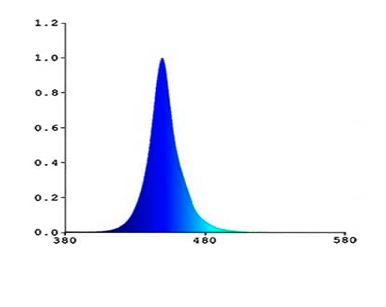
The LED channel with the blue spectrum emits blue light at a wavelength of 450 nm. Blue light is crucial during germination and vegetative growth, aiding in plant responses such as phototropic curvature (lateral growth), inhibiting excessive elongation, and regulating stomatal opening (plant respiration).
Under blue light, plants produce more lateral shoots, appear more compact and bushy, and develop a sturdy structure. Furthermore, the blue wavelength is the second most effective color for driving the photosynthetic response.
7. Green light spectrum
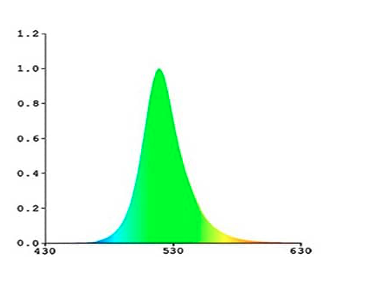
The LED channel with the green spectrum emits a wavelength of 525 nm. Generally, many plants have green leaves, reflecting the majority of the green component of the light they receive.
Any green light input helps penetrate deeper into the plant canopy and facilitates better nutrient metabolism.
Crops with leaves of a color other than green—such as red cabbage—also require the green component of light; if only a combination of blue and red light is provided, the crops will change color due to insufficient light energy absorption, altering their pigmentation and losing most of their properties.
8. Red and orange radiation spectrum
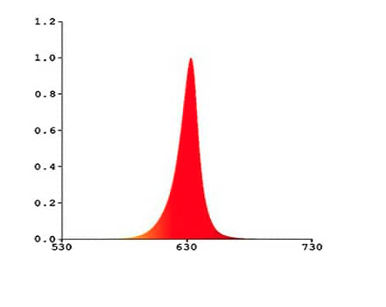
The LED channel with the orange spectrum emits a wavelength of 625 nm. The LED channel with the red spectrum emits a wavelength of 605 nm. Plants possess a specific photoreceptor called phytochrome for absorbing this type of light.
Red light enhances flavor, quality, and the quantity of flowering and fruit production. Furthermore, red light increases the production of meta-topolin, a hormone that helps maintain high chlorophyll levels in your crops, converting absorbed solar energy into sugars.
Red light influences the plant's decision on whether or not to flower. For this reason, it is essential to strictly protect periods of darkness from red light exposure to avoid unduly delaying the resulting fruit harvest.
What light intensity should you choose?
The choice of required light intensity depends greatly on your types of research. In the table below we give examples of intensities requested by our customers and prospects, calculated at 25 cm from the light source.
Plant | Step | PPFD recommanded |
Lettuce | sowing | 100-300 µmol/s/m² |
Tomato | vegetative growth | 200-350 µmol/s/m² |
Tomato | Sowing | 150-350 µmol/s/m² |
Tomato | vegetative growth | 400-600 µmol/s/m² |
Tomato | Flowering/fruiting | 480-800 µmol/s/m² |
Cuttings | Callus formation | 50-70 µmol/s/m² |
Cuttings | Root development | 100-300 µmol/s/m² |
Two examples of custom lighting solutions developed for clients
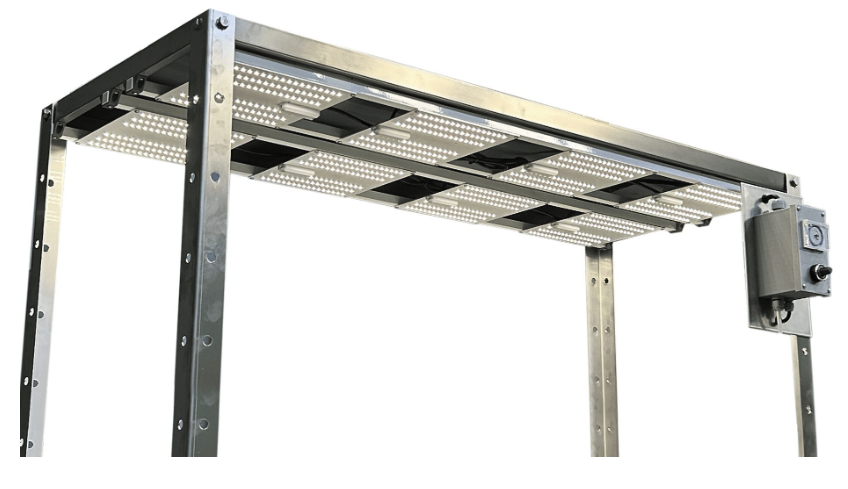
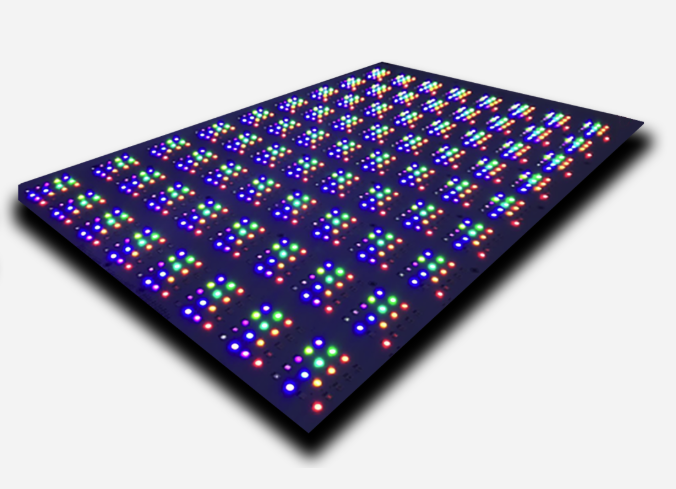
In the two images below:
On the left, a stainless steel shelf unit installed in a walk-in growth chamber, featuring a white spectrum at 500 µmol/s/m².
A multi-channel LED array. Users can select specific colors and intensities and vary them over time—for instance, to simulate seasons, dawn, or dusk, or simply to optimize plant growth.